
MEN Logo_Men Icon Light

Opinion

ClassRoom

For Parents

Leadership

"We are always looking for stakeholders, If you would like to contribute,"

John-Social-Media-Headshot

John Huber

Founder

New ACLU Report Questions Whether School Resource Officers Make Schools Safer

By: John E Huber, MarylandK12.com

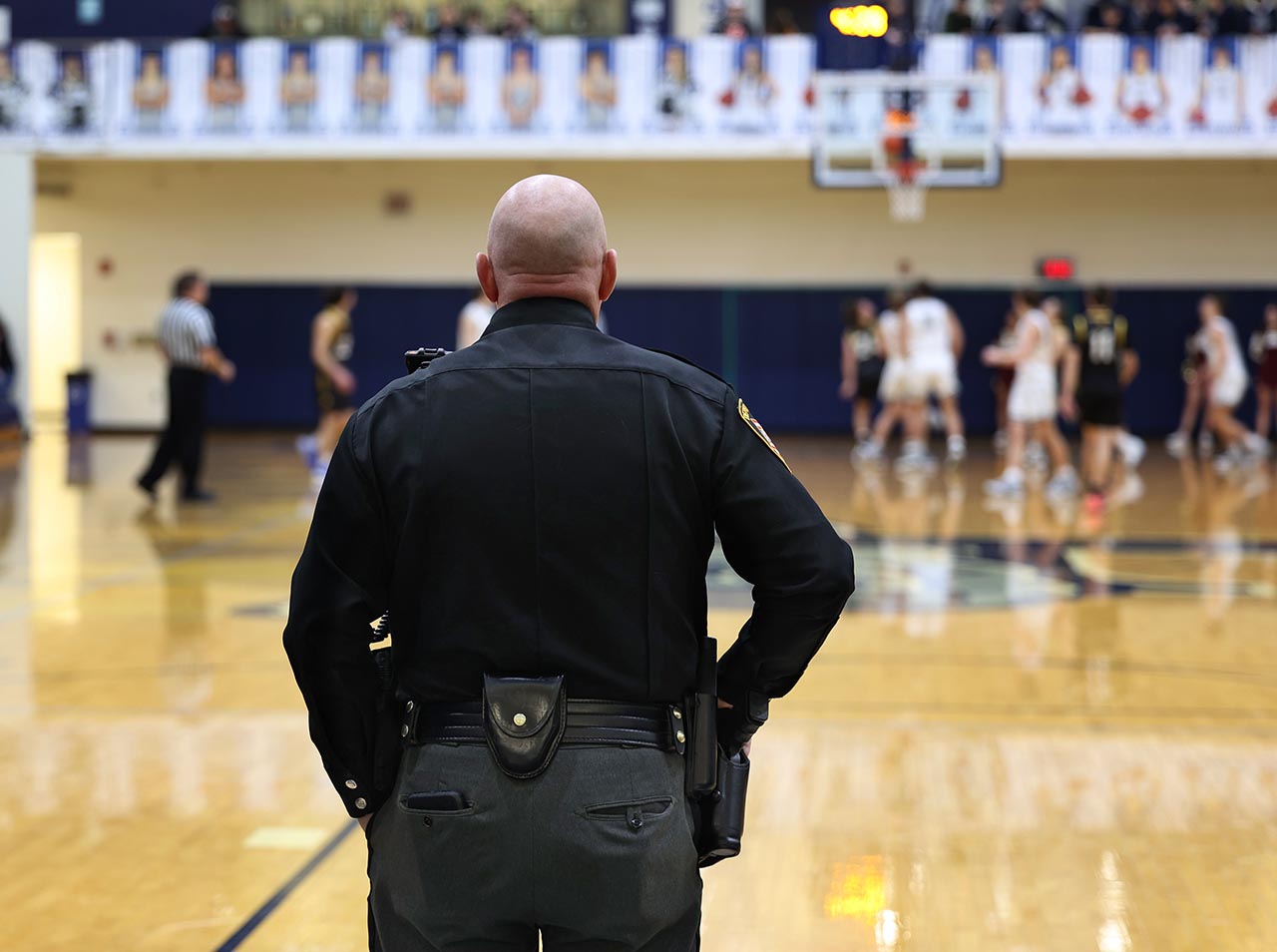
The ACLU of Iowa recently released a report titled Rethinking School Safety in Iowa: The Harms of School Resource Officers (SROs). The report argues that School Resource Officers contribute to increased referrals, arrests, and disciplinary consequences for students, particularly Black students and students with disabilities. It also questions whether SROs actually make schools safer and recommends moving resources away from police officers and toward counselors, social workers, and mental health professionals.

There are parts of the report that deserve consideration. Schools should not be using police officers to manage routine discipline. Most educators, administrators, and SRO professionals would agree that classroom disruptions, disrespect, hallway behavior, and ordinary school discipline belong in the hands of teachers and administrators, not law enforcement.

The National Association of School Resource Officers (NASRO) has been making that point for years. This is nothing new.

The report also raises concerns about training requirements, parental notification procedures, and program oversight. Those are legitimate conversations. If a district employs SROs, it should have clear policies, specialized training, and well-defined expectations regarding when officers become involved with students.  Those who violate these procedures should be held accountable; especially schools.

Where the report runs into difficulty is the question it chooses to ask.

The report spends much time examining referral rates, arrest rates, disciplinary outcomes, demographic disparities, and examples of student interactions with officers. What it does not spend much time examining are the very issues that led most communities to fund SROs in the first place.

Where are the statistics regarding weapons recoveries? Where are the statistics regarding threat assessments? Where are the statistics regarding credible threats identified before violence occurred? Where are the statistics regarding assaults interrupted, weapons confiscated, emergency responses, or violent incidents prevented?

Those are the questions most parents ask when discussing school safety.

The report acknowledges that it could not identify research clearly demonstrating that schools with SROs are safer than schools without them.

Yet the absence of evidence in a particular study is not necessarily evidence that SROs provide no benefit. A report recommending the elimination of SRO programs should devote substantial attention to the primary justification for those programs. The discussion should include both potential harms and potential benefits.

Another issue involves the way data is interpreted.

Many reports assume that increases in referrals or arrests are bad things. That is not true.

Schools have spent years being criticized for underreporting incidents, minimizing discipline problems, and failing to document behavior accurately. Parents frequently complain that serious incidents are ignored, hidden, or quietly handled without accountability.

If an SRO program results in more accurate reporting of criminal behavior, that does not automatically indicate a less safe school. In some cases, it may indicate that incidents previously ignored are now being documented. An increase in reporting is not necessarily the same as an increase in incidents.

The report cites examples involving vaping, classroom disruptions, playground conflicts, and young children exhibiting challenging behaviors. Those examples are concerning if they represent standard practice. The question is whether they do. The report provides examples, but it is far less clear how representative those incidents are of overall SRO activity across Iowa. Were these isolated situations? Were they common? Were they rare exceptions among thousands of student interactions? Those details matter when evaluating an entire program.

My own position on SROs is shaped by years of experience working in schools and speaking on school safety issues at national conferences. Most effective SRO programs are built around relationships, prevention, threat assessment, information gathering, and emergency preparedness.

That is precisely why NASRO describes the role through its well-known triad concept: educator, informal counselor, and law enforcement officer. Critics of SRO programs often focus exclusively on the third component while giving very little attention to the first two.

Many students interact with SROs every day without ever being arrested, cited, questioned, or disciplined. They know the officer by name. They see him or her in classrooms. They seek out the officer when they feel unsafe. Much of the work happens before a situation becomes a law enforcement matter.

The report also highlights the cost of SRO programs, estimating that an officer costs roughly $98,000 annually. That figure may be accurate. The report then compares that cost to the salary of a counselor and suggests those resources should be redirected elsewhere.  When your child is being assaulted, threatened or attacked, do want a counselor?

Counselors, social workers and psychologists are essential. SROs serve a different function.

A complete cost-benefit discussion would examine the value of identifying one firearm, disrupting one credible threat, or stopping one violent incident before it occurs. Those outcomes are difficult to measure. They are also central to why many communities continue funding SRO programs.

One final point is worth noting.

Many school systems around the country have experimented with reducing or eliminating School Resource Officers. In many cases, those decisions were celebrated at the time. Then a serious incident occurs. A weapon is found. A stabbing takes place. A shooting occurs. A violent assault happens. Within days, community members begin asking the same question:

“Why wasn’t there an officer at the school?”

Los Angeles provides one of the clearest examples. Efforts to reduce school policing generated significant support until concerns about safety and violence pushed the discussion back toward security and enforcement. The cycle repeats itself in community after community.

The public generally supports removing SROs until their child is harmed.

The Iowa report asks an important question about referrals, arrests, and student outcomes. Those issues deserve attention. School safety discussions should also examine violence prevention, threat mitigation, emergency response, and weapons incidents with the same level of scrutiny.

Until both sides of the equation are evaluated, the conversation about School Resource Officers remains incomplete.

Dig Deeper With Our Longreads

Newsletter Sign up to get our best longform features, investigations, and thought-provoking essays, in your inbox every Sunday.

The MEN was founded by John Huber in the fall of 2020. It was founded to provide a platform for expert opinion and commentary on current issues that directly or indirectly affect education. All opinions are valued and accepted providing they are expressed in a professional manner. The Maryland Education Network consists of Blogs, Videos, and other interaction among the K-12 community.