
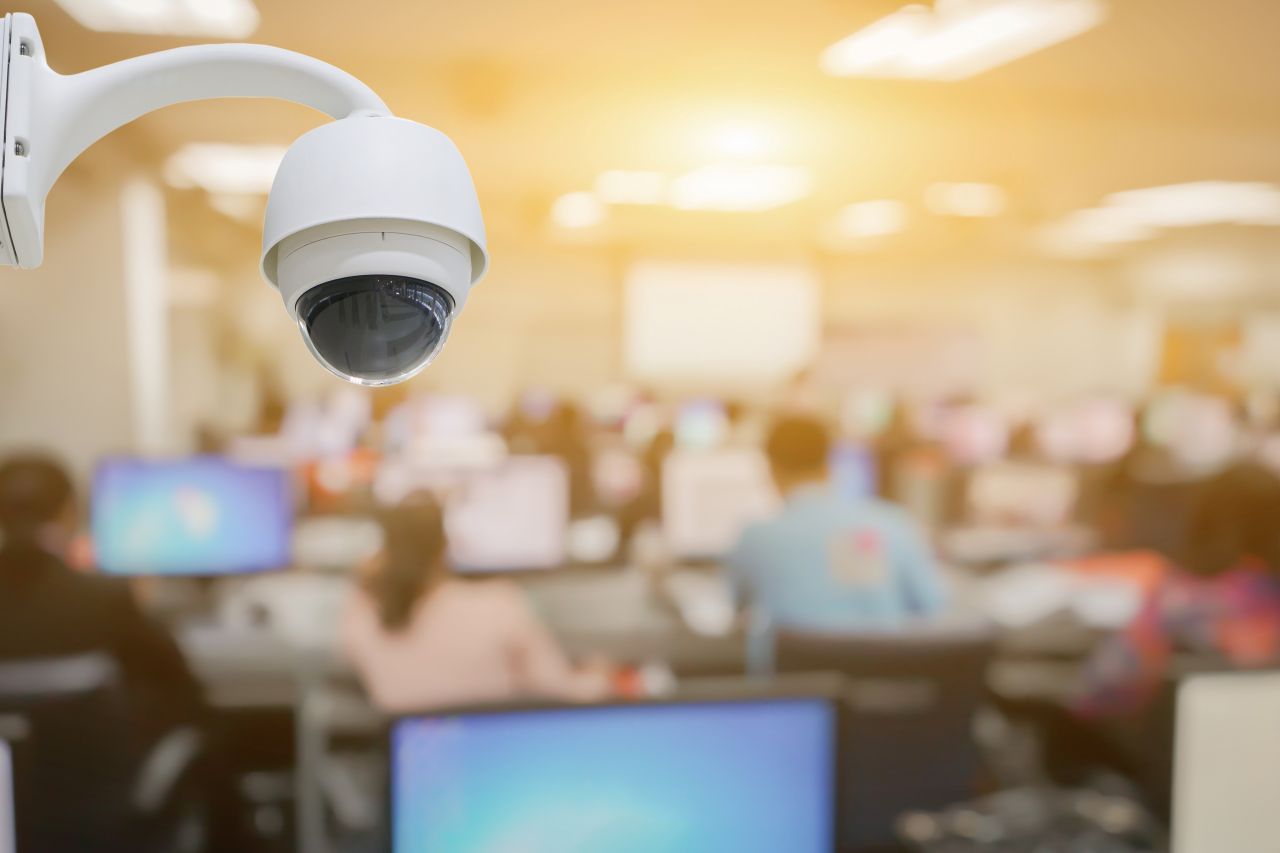
Cameras in Special Education Classrooms?
The debate over placing cameras in self-contained special education classrooms is gaining momentum across the country, and Maryland is one of the states actively considering, and implementing such policy. Legislators in Maryland joined those in Florida, Iowa, South Carolina, and Tennessee this year introducing laws and policies that would allow or require video surveillance in some special education settings. The push follows similar laws already adopted in states such as Texas, Louisiana, West Virginia, Georgia, and Alabama.
Much of the discussion has focused on privacy concerns. Disability advocates, teachers’ unions, and some educators worry that surveillance could create uncomfortable working environments, compromise student privacy, and further isolate a student population that already faces unique challenges. Others argue that cameras address symptoms rather than underlying problems such as inadequate staffing, insufficient training, and poor behavioral support systems; not to mention the poor behavior of the students.
At the same time, the debate often overlooks the idea that public school classrooms are public spaces operating within publicly funded institutions. Taxpayers pay for the buildings, the equipment, the personnel, and the services delivered within those classrooms. School employees are public employees. Students are receiving public services. The expectation of privacy in such settings is understandably different than it would be inside a private residence.
The argument that cameras somehow create an unprecedented level of surveillance is difficult when one considers modern reality. Most families spend large portions of their day in places already covered by cameras. Shopping centers, grocery stores, airports, government buildings, sports venues, parking lots, and countless retail establishments record activity continuously. Parents routinely bring their children into those spaces without concern because surveillance has become an accepted part of public life.
A special education classroom serving students who may be unable to communicate what occurs during the school day presents a much stronger argument for accountability than a shopping mall ever could.
That is one reason support for classroom cameras remains strong among many parents of children with significant disabilities. Several of the incidents that helped drive legislation around the country involved allegations of misconduct, neglect, excessive restraint, or physical abuse involving students who could not reliably tell their parents what had happened. In some cases, concerns emerged only after other adults witnessed the behavior or law enforcement became involved.
The central argument for cameras is that cameras protect everyone including students, teachers, paraprofessionals, administrators and the school systems themselves.
Video evidence has a remarkable ability to resolve disputes that otherwise become one person’s word against another’s. When allegations arise, cameras can confirm misconduct when it occurs and disprove accusations when it does not. This objectivity benefits all parties involved.
One of the concerns highlighted in the Education Week discussion involves agreements limiting how footage may be used. In some jurisdictions, teacher organizations have supported cameras as long as recordings are used strictly for safety and investigative purposes rather than routine employee evaluations. That compromise may help alleviate concerns about constant monitoring of instructional practices.
Teachers are public employees and work in public spaces with other people’s children. They should not be entitled to any level of privacy. It is not a private space.
If cameras exist to document what happens in public school classrooms, restricting their use too severely undermines the purpose. A recording system that can only be accessed under narrowly defined circumstances may provide less accountability than many parents and taxpayers expect. When significant incidents involving student safety, staff conduct, or classroom management occur, school leaders should be able to use available evidence to understand what happened.
That does not mean every moment of footage should be publicly available or reviewed casually. Student records remain protected by law and sensitive information should remain confidential. Accountability and privacy are not mutually exclusive.
Maryland’s involvement in this issue is significant because it reflects a growing recognition that the issue extends beyond isolated incidents. Do policymakers believe the benefits of greater transparency outweigh the concerns associated with increased monitoring? That remains to be seen. Many parents clearly believe they do.
For families with children who are nonverbal, have significant communication challenges, or require intensive supports, cameras can represent something far more important than surveillance. They represent reassurance. They provide confidence that concerns can be investigated thoroughly and that events within the classroom can be documented accurately.
Public schools already operate under extensive accountability requirements. Staff evaluations, student assessments, audits, public records laws, and state oversight mechanisms are all designed to provide transparency regarding educational operations. Cameras provide another layer of documentation in environments where misunderstandings, allegations, or serious incidents can have significant consequences. As more states move forward with legislation, Maryland policymakers will eventually need to decide where they stand.
The debate should consider the interests of students, families, taxpayers, and school systems seeking accurate information when concerns arise.
Many Americans already accept constant surveillance in nearly every other public environment they enter. It is difficult to argue that a self-contained special education classroom, serving some of the most vulnerable students in the education system, deserves less accountability than a department store, airport, or shopping mall.
That is likely why support for these measures continues to grow, and why this debate is far from over.
Dig Deeper With Our Longreads
Newsletter Sign up to get our best longform features, investigations, and thought-provoking essays, in your inbox every Sunday.
The MEN was founded by John Huber in the fall of 2020. It was founded to provide a platform for expert opinion and commentary on current issues that directly or indirectly affect education. All opinions are valued and accepted providing they are expressed in a professional manner. The Maryland Education Network consists of Blogs, Videos, and other interaction among the K-12 community.
Recent Video
Even Education Week Admits It: Student Behavior Is Getting Worse
monperatoto monperatoto situs toto monperatoto monperatoto toto monperatoto monperatoto monperatoto monperatoto monperatoto monperatoto monperatoto monperatoto monperatoto monperatoto monperatoto monperatoto...