
DMPTC Is Right About Somerset’s Book Policy
The controversy surrounding Somerset County’s library policy continues to generate headlines, and the recent coverage by The Baltimore Banner has only added to the tension. At the center of the debate is Maryland’s so-called “Freedom to Read Act” and Somerset County Board Policy 500-19, which governs the review and selection of library materials.
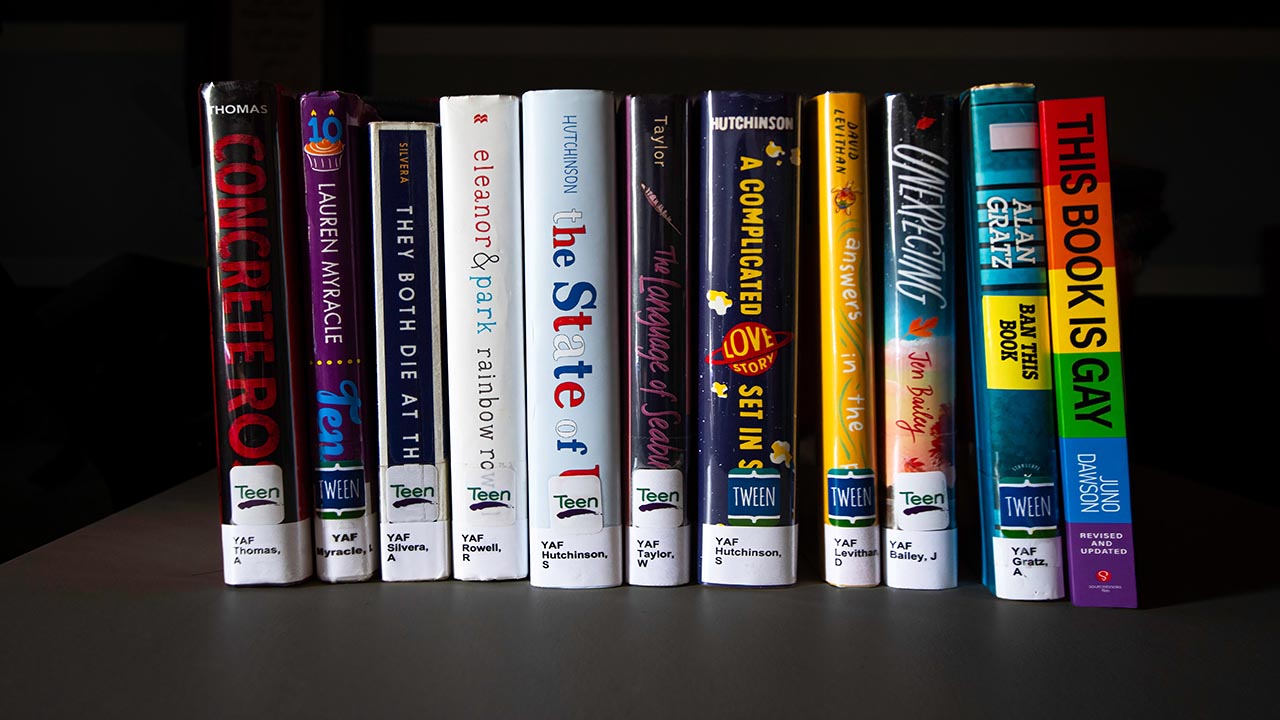
The Somerset County Board is considering a policy that would limit access to books classified as “young adult” literature to students who are 18 years old or older. Some say the proposal as a restriction that would prevent most middle and high school students from checking out books written primarily for teens and young adults. Whether one agrees with that policy is a separate question. School boards have long possessed the authority to determine what materials are suitable for students and to establish rules governing access to those materials. The Somerset County Board may be right, wrong, wise, or unwise in adopting such a policy, but there is little dispute that questions of library content and age appropriateness fall squarely within the policy-making authority granted to local boards of education.
One sentence in the Banner’s reporting deserves particular attention:
“The act, passed two years ago as a way to ensure that political ideology doesn’t encroach on the selection of books in school libraries, requires any book removed from a public school library to be reviewed by a local committee.”
The statement sounds straightforward until you stop and think about it. The implication is that questioning if materials are appropriate is political, while advocating for their retention somehow is not.
People arguing to keep books in school libraries or otherwise supporting materials that include explicit sexual content are advancing a set of beliefs about education, access, identity, and student rights. People arguing for restrictions in such materials are advancing beliefs about age appropriateness, parental rights, community standards, and educational suitability. Both sides are advancing viewpoints. Both sides are participating in politics.
The very name “Freedom to Read Act” is suspect as well. It suggests that questioning any material is an attack on someone’s “freedom” to read. That is a powerful political message before the debate even begins.
What is often missing from the discussion is the fact that the law requires a review process, and that process is taking place. The review process established under state law appears to be operating. Materials are being examined, public discussions are taking place, and the Board is considering book selections through the procedures currently in place
The complaint from many critics seems less about the existence of a review process and more about the possibility that the process may produce outcomes they do not like.
I do not always agree with the Delmarva Parent Teacher Coalition. In fact, readers of MarylandK12.com know that I have disagreed with them on several recent issues; however, I am with them on this one.
The debate has increasingly been spoken of as a battle between censorship and free expression when the real issue is governance. A locally elected board is exercising authority granted to it under Maryland law. A committee review process exists. Citizens have opportunities to speak. Board members vote publicly. That is how it is supposed to function.
Public schools are funded by local taxpayers and operated on behalf of local communities. Those communities elect school board members specifically to make decisions about curriculum, policies, budgets, and educational programs.
If residents believe the Somerset County Board of Education is making poor decisions, there is already a mechanism for addressing that concern.
It’s called an election.
What often gets lost in these discussions is that school boards make judgments about educational suitability every day. They review textbooks. They approve curricula. They decide which courses are offered and which instructional materials are purchased. Nobody suggests that reviewing a math textbook before buying it violates a student’s freedom to learn algebra.
Library materials should not be exempt from community review simply because someone objects to the outcome.
The criticism directed at Somerset County sometimes gives the impression that local input is valuable only when it produces the “correct” answer. When a review committee or school board reaches a conclusion that activists, advocacy groups, librarians, or reporters disagree with, the legitimacy of the process itself suddenly comes under attack.
The real question is not whether politics exists in this debate. Politics is everywhere in this debate. The real question is who gets to make the final decision once a lawful review process has been established.
In Somerset County, that responsibility belongs to the locally elected board and the review structures established under Maryland law.
Reasonable people can disagree with the decisions being made. They can advocate for different policies. They can run candidates for office. They can vote. What should concern us is the growing tendency to portray every disagreement over educational materials as either censorship or extremism.
The Somerset County debate is about who decides what belongs in public schools. On that question, local communities deserve a voice, even when the answer is not what everyone wants to hear.
Dig Deeper With Our Longreads
Newsletter Sign up to get our best longform features, investigations, and thought-provoking essays, in your inbox every Sunday.
The MEN was founded by John Huber in the fall of 2020. It was founded to provide a platform for expert opinion and commentary on current issues that directly or indirectly affect education. All opinions are valued and accepted providing they are expressed in a professional manner. The Maryland Education Network consists of Blogs, Videos, and other interaction among the K-12 community.