
MEN Logo_Men Icon Light

Opinion

ClassRoom

For Parents

Leadership

"We are always looking for stakeholders, If you would like to contribute,"

John-Social-Media-Headshot

John Huber

Founder

Can Schools Discipline Students for Social Media Posts?

A recent article in Government Technology discussed whether schools can legally discipline students for social media posts made off campus. The article highlighted cases in Colorado where students were suspended or expelled for online behavior involving threats, bullying, and offensive content.  Attorneys and advocates argued that such actions violate students’ First Amendment rights.

This seems like a straightforward free-speech issue. Students leave school at 3 p.m., go home, and post something online. Why should the school have any authority over what happens off school campus? That argument usually lasts until someone’s child becomes the target.

Suddenly, parents who previously objected to school involvement are demanding to know what administrators are doing about the threats, harassment, rumors, bullying, or online intimidation directed at their child. The same people arguing that schools have no authority often become the first to insist that schools take action.

The reality is that the distinction between school and home has become increasingly difficult to define. Social media doesn’t stop operating when students leave campus and conflicts that begin online frequently reappear in classrooms, hallways, cafeterias, athletic events, and school buses the next morning. School administrators know this because they deal with the consequences every day.

In Maryland, most systems have policies that address this. Behavior and discipline policies usually contain language permitting administrative action when student conduct causes, or is reasonably likely to cause, a disruption to the educational environment. The behavior does not necessarily need to occur on school grounds. If off-campus conduct creates a substantial disruption to school operations, threatens students, interferes with learning, or creates safety concerns, administrators have grounds to act.

That authority is not because schools want to monitor students’ private lives. It is because the consequences of off-campus behavior very often show up inside schools.

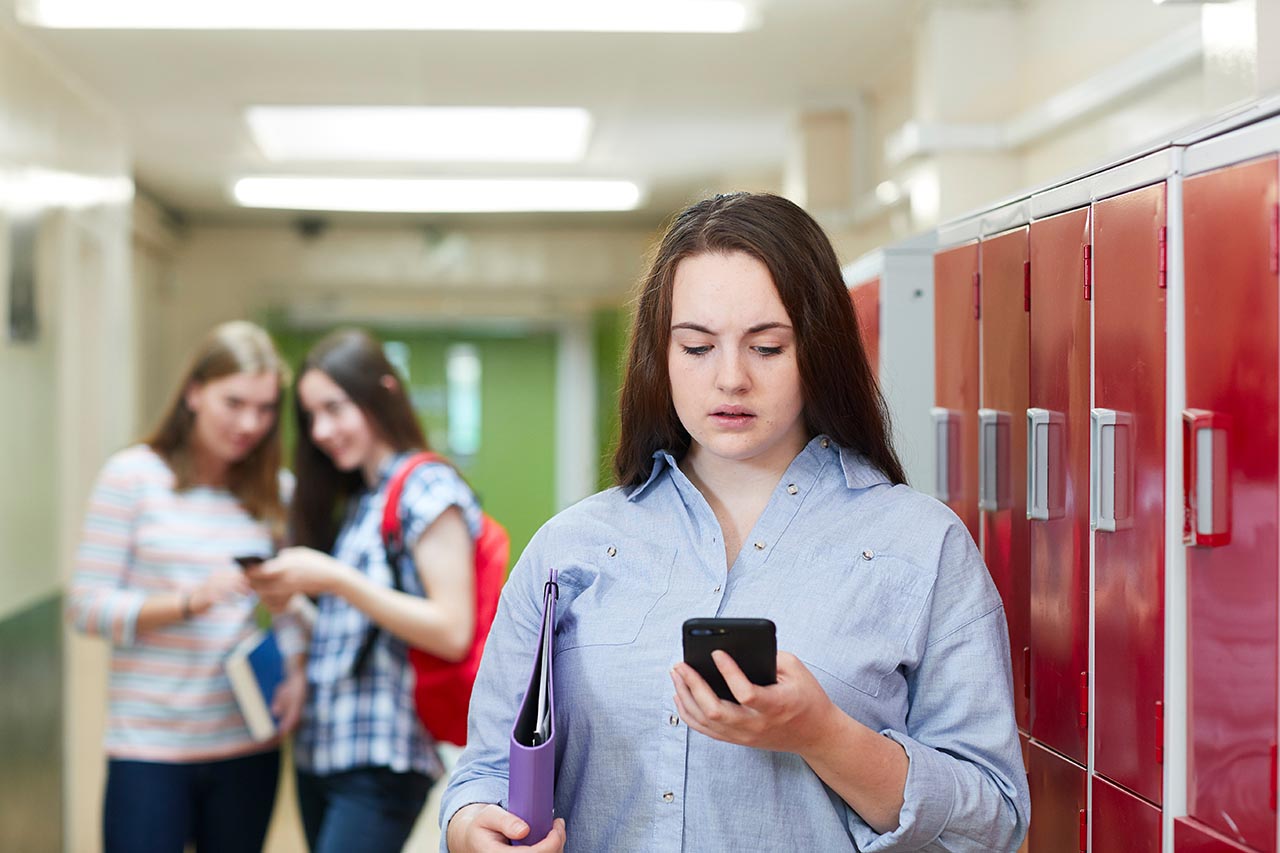
Take a typical example. A student creates a social media account dedicated to mocking another student. The posts occur entirely outside of school. The account gains followers and messages are shared. Screenshots circulate and students spend the next day discussing the content. The targeted student refuses to attend class, spends the day in the counselor’s office, or misses school altogether.

At that point, the behavior is no longer off-campus and has disrupted the learning environment and caused a disruption within the school.

Courts have long recognized that schools possess authority when student speech creates a “material and substantial disruption” to the school environment, a principle that dates back decades and continues to influence student speech cases today. However, modern social media platforms have made determining what constitutes a disruption significantly more complicated.

Schools, however, do not have unlimited authority. Students have constitutional rights, and schools cannot punish every unpopular opinion or offensive statement posted online. The Supreme Court’s decision in Mahanoy Area School District v. B.L. reinforced that off-campus speech generally receives stronger First Amendment protection than speech occurring on school grounds. At the same time, the Court acknowledged that schools maintain legitimate interests in addressing serious bullying, harassment, threats, and behaviors that interfere with the rights of other students.  That balance is where much of the confusion begins.

Some people view any school response to social media activity as government overreach. Others want schools to aggressively address every online disagreement. Neither position works in practice.

Administrators are left trying to determine whether a social media post represents protected expression, immature behavior, harassment, bullying, or a legitimate threat. They must do so while facing pressure from parents, students, attorneys, advocacy groups, and community members, all of whom often have very different views about what schools should do. The challenge becomes even greater when social media posts involve threats.

School leaders today operate in an environment where ignoring warning signs can have devastating consequences. Over the past two decades, school safety discussions have repeatedly emphasized the importance of recognizing threatening behavior before violence occurs. As a result, administrators are understandably reluctant to dismiss concerning online posts as mere jokes. When a student references violence, targets another student, identifies a school, or creates content that causes widespread concern, many administrators feel they have little choice but to intervene.

Critics often describe this as an expansion of school authority. Supporters describe it as common sense.

Schools should not, and cannot, become social media police. They can’t monitor every disagreement or punish students for expressing unpopular views. At the same time, pretending that social media exists in a completely separate universe from schools is no longer realistic. Students carry their online experiences into classrooms every day. Teachers deal with the fallout. Administrators investigate the consequences. Counselors support victims. Parents demand answers. The impact is real, even when the original post occurred miles from campus.

That is why many Maryland school systems include disruption language within their discipline policies. The authority is based on the effect that the conduct has on the educational environment, and not on where the behavior takes place.

Reasonable people can disagree about where the line should be drawn. Those conversations are healthy and necessary. What seems difficult to defend is the argument that schools should simply ignore off-campus behavior that creates fear, disrupts instruction, targets students, or threatens safety. Most people reject that idea the moment the behavior affects their own child. And that is the best test of all.

When discussing social media discipline policies, parents should ask themselves a simple question: If my child were the victim, would I want the school involved? For most families, the answer is yes.

That’s why this issue is likely to remain one of the most challenging questions facing schools in the social media age.

Dig Deeper With Our Longreads

Newsletter Sign up to get our best longform features, investigations, and thought-provoking essays, in your inbox every Sunday.

The MEN was founded by John Huber in the fall of 2020. It was founded to provide a platform for expert opinion and commentary on current issues that directly or indirectly affect education. All opinions are valued and accepted providing they are expressed in a professional manner. The Maryland Education Network consists of Blogs, Videos, and other interaction among the K-12 community.