
MEN Logo_Men Icon Light

Opinion

ClassRoom

For Parents

Leadership

"We are always looking for stakeholders, If you would like to contribute,"

John-Social-Media-Headshot

John Huber

Founder

A New Cell Phone Ban Study Is Out. It Answers the Easy Question, Not the Hard One

By: John Huber MarylandK12.com

Cell Phone Bans, Enforcement, and the Study That Doesn’t Solve the Hard Part

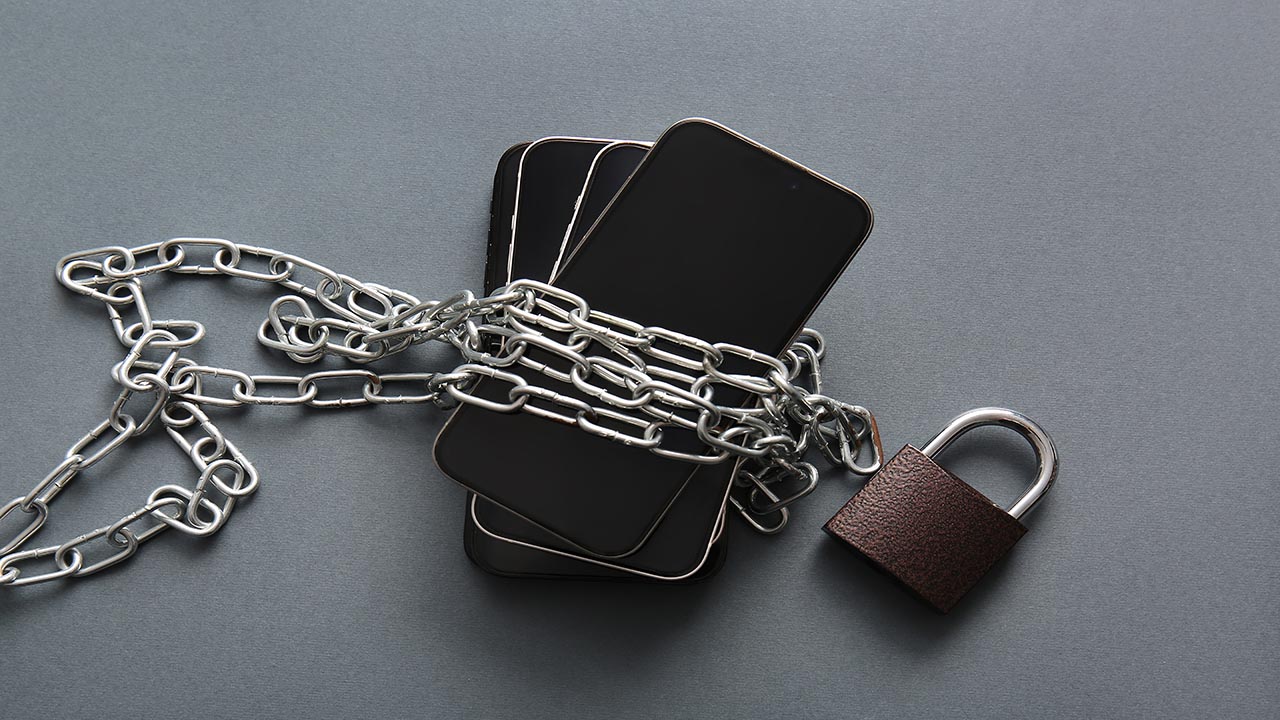
A new nationwide study on school cell phone bans has just been released, and it is already being cited as evidence that restricting student phone access during the school day works. The research looks at the use of lockable phone pouches across thousands of U.S. schools and presents conclusions about reduced phone use, student behavior, and academic outcomes. At first glance, the study appears to offer the success policymakers and school leaders want. A closer and more careful look, however, suggests that the study answers the easiest question while the far more difficult one that schools continue to face.

This study examines more than 4,600 U.S. public schools that adopted Yondr lockable phone pouches over the past decade. Using GPS activity data, teacher surveys, discipline records, attendance figures, and standardized test scores, the researchers conclude that pouches significantly reduce in‑school phone access. On that simple point, the study succeeds. Yes. It’s agreed that when phones are physically locked away, students use them less during the school day. A study was not required to establish that.

This point, however, is not the main question confronting schools.

What the Study Shows, Clearly and Repeatedly

The strongest evidence in the report relates to access. Schools using lockable pouches see marked declines in phone activity during school hours. Teachers report fewer students using phones during class. Over time, phone pings during the school day fall by roughly 20 to 30 percent.

The study also documents predictable problems during the initial year of implementation. Disciplinary incidents rise significantly after adoption, suspensions increase by roughly 10 to 15 percent, and student self‑reported well‑being declines significantly. Only after one to two years do those measures stabilize, with well‑being eventually rising slightly above baseline.

Academic outcomes are not as strong. Overall effects on test scores are negligible. High schools show modest gains in math that amount to less than a single percentage point. Middle schools experience small negative effects that are roughly half the size of the high school increases. Attendance shows a brief decline and then returns to prior levels. Classroom attention and online bullying do not change in statistically meaningful ways.

In short, phones are harder to use. Discipline spikes. Academic improvement is modest and uneven and sometimes absent.

The Enforcement Question the Study Does Not Answer

This is where lived experience matters.

As I have written repeatedly on MarylandK12.com over the last several years, cell phone policy is not fundamentally a design problem. It is an enforcement problem. This study largely assumes that enforcement, once the pouch is introduced, simply happens.

In real schools, enforcement is neither automatic nor neutral.

Lockable pouches transfer responsibility directly to teachers and administrators. Someone must check compliance. Someone must handle refusals. Someone must manage lost pouches, damaged devices, substitute coverage, parent complaints. None of that shows up in test scores or GPS data.

The study confirms a rise in disciplinary incidents immediately after implementation. That should not be treated as a temporary inconvenience. That spike reflects the daily reality of enforcing a policy students resist, parents question, and staff must apply unevenly across hundreds of classrooms. As mentioned earlier, a 10-15% spike in suspensions is within the norms of this study.  That fact alone would not be allowed in Maryland.  No policy that would expect to see that much of an increase in suspensions would be adopted. So, what Maryland does, is adopt policies such as these and not allow suspensions for non-compliance. When the policies fail, they either quietly go away, or fall into an endless back and forth, cat and mouse game between students, teachers, administrators and parents that makes no progress and solves nothing.

It also does not account for workarounds. Students adapt quickly. Burner phones, decoy phones, and selective compliance are not hypotheticals. They are routine. When enforcement becomes inconsistent, the legitimacy of the policy goes away. When that happens, the policy survives on paper only.

Flawed Study with Vendor Data and Incentives

This study relies on detailed records provided by the same company that sells the lockable pouches. That does not invalidate the research, but it absolutely creates question and makes one skeptical.

Effectiveness here is limited in how it is defined. The product works when used as intended. The research never asks whether schools can sustain that use without destabilizing classrooms, exhausting staff, or provoking political backlash that eventually softens enforcement.

In other words, the study measures product performance, not the problem it is trying to solve.

Schools that purchase pouches are already signaling a willingness to enforce strictly. Schools that abandon the policy, apply it inconsistently, or quietly stop enforcing it are far harder to capture in adoption datasets.

Why Middle Schools and High Schools Diverge

One of the most telling findings is the difference between middle and high school outcomes. High schools show marginal academic gains. Middle schools do not.

That aligns with administrator experience. Younger students tend to resist restrictions more intensely and lack the maturity to navigate sudden limitations without sustained adult support. Policies requiring constant enforcement load the burden onto staff already managing the developmentally challenging environments in middle schools. .

The study documents the outcomes. It does not explain the cost.

The Maryland Context Cannot Be Waved Away

Maryland districts have experimented with phone restrictions in various forms for years. As I have noted previously on MarylandK12.com, these efforts tend to follow the same arc. Initial enforcement is strict. Complaints rise. Teachers become the phone police. Administrators referee endless disputes. Over time, enforcement softens. Class by class, building by building, the policy fails.

This is not a failure of will. It is a consequence of constraints that schools operate under today.

A ban that requires perfect enforcement to succeed is not realistic in an environment where exclusionary discipline is discouraged, due process is paramount, and parental tolerance for inconvenience is limited.

What the Study Leaves Unanswered

The most important questions remain unresolved.

How much instructional time is lost enforcing compliance. How teacher morale is affected when policies turn them into constant enforcers. How administrative workload shifts from leadership to surveillance. How uneven enforcement undermines trust.

These factors determine whether a policy lasts. They are absent from the data.

A More Honest Conclusion

Lockable pouches do what they are designed to do. Phones are harder to access. That alone does not make them a solution.

Schools do not fail because they lack the right pouch. They struggle because they are asked to enforce rigid policies in fluid human environments with limited authority and shrinking tolerance for conflict.

Studies can measure restriction. They cannot restore authority.

Until that gap is acknowledged honestly, cell phone bans will continue to cycle between enthusiasm, enforcement, exhaustion, and retreat, regardless of how many pouches are purchased.

Dig Deeper With Our Longreads

Newsletter Sign up to get our best longform features, investigations, and thought-provoking essays, in your inbox every Sunday.

The MEN was founded by John Huber in the fall of 2020. It was founded to provide a platform for expert opinion and commentary on current issues that directly or indirectly affect education. All opinions are valued and accepted providing they are expressed in a professional manner. The Maryland Education Network consists of Blogs, Videos, and other interaction among the K-12 community.