



What the Towson Bus Stop Fight Emails Really Show, And What They Don’t
By John Huber, Marylandk12.com
I have followed the Towson bus stop fight for several weeks now, deliberately resisting the urge to jump in early.
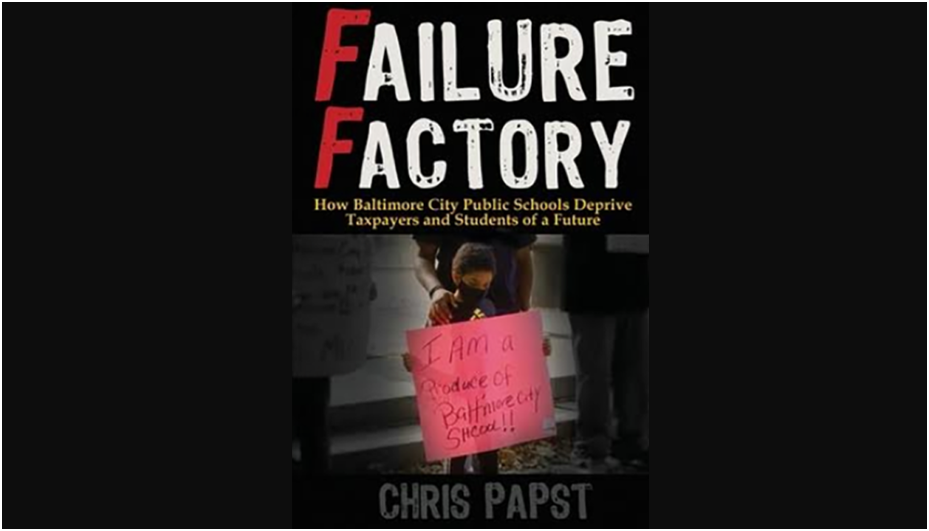
Incidents like this tend to move faster on social media than facts do, and once a narrative is in place, it is tough to correct, even when more information becomes available. When Chris Papst from Fox 45’s Project Baltimore reported that he had obtained emails from parents warning Dumbarton Middle School administrators about escalating student behavior, it was clear that the next phase of the story would focus on responsibility. Now that he has provided the emails, it’s worth looking at what they actually demonstrate.
I have read the emails carefully. And after spending 15 years as a school administrator dealing with situations exactly like this, I can say with confidence that these emails tell a much more complicated, and far less satisfying, story than the one many want to tell.
The claim is simple: parents warned the school, problems escalated, and therefore the school failed to act and, thus, is responsible.
That claim assumes something important; that schools possess both the authority and the practical ability to prevent off‑campus student conduct, simply because concerns were raised in advance.
That assumption is wrong.
The emails show what administrators everywhere routinely face: concerned parents reporting troubling behavior, vague threats, or unsafe conditions, often without concrete evidence, identifiable victims, or corroboration beyond student accounts that are frequently denied by other students.
Even in cases such as these where the actions of students are clear and the individuals are identifiable; schools can act on their behavior based on the information they have. It appears in this case they did. The assistant principal stated that consequences have been assigned. That is as much information as she is allowed to provide.
Assignment of consequences does not mean the problem has been “fixed.” It simply means the school did what they were legally allowed to do.
When administrators receive emails like these, they do not gain the power to act preemptively in the way many imagine. They cannot indefinitely suspend students based on warnings alone. They cannot remove students from bus routes without due process, and they cannot permanently remove ANY student for ANY reason. Read that sentence again.
They cannot discipline students for conduct that has not been verified or is alleged but denied.
What they can do, and what appears to have been done here, is contact transportation officials, monitor the situation, investigate reports as they arise, and intervene when policy allows. But “intervention” does not mean removal, separation, or guaranteed prevention.
Schools do not operate in the way crime shows lead people to believe.
This situation is a classic no‑win scenario for school leaders.
If administrators act aggressively based on warnings alone, they face accusations of violating students’ rights, targeting certain children unfairly, or overreacting without proof. If they act cautiously, investigating, monitoring, documenting concerns, and working within disciplinary limits, they are accused of indifference when an incident eventually occurs.
Very few people outside the profession appreciate how narrow the lane actually is.
Administrators are not present at bus stops. They do not patrol public sidewalks after dismissal. They cannot place staff at every gathering point where students linger. When an incident takes place off-campus, on public property, after school hours, a school’s authority is sharply constrained.
They can act based on what they know and can verify, then hope for the best the next day. That’s it!
It is uncomfortable to acknowledge, but important to say plainly: schools are often blamed for community‑level youth behavior they do not control and cannot fully prevent.
What the Emails Actually Reflect
The emails released by Project Baltimore reflect a familiar pattern: escalating concern, incomplete information, administrative replies signaling attention, and continued frustration as desired outcomes fail to materialize.
What they do not reflect is negligence, indifference, or certainty that violence would occur at a specific time and place.
They show administrators responding within the scope of their role, not ignoring the situation. More importantly, they show the limits of what school systems can accomplish when the underlying issues involve supervision beyond school grounds, peer dynamics, and behavior that occurs in public spaces.
Calling this “preventable” in hindsight may feel emotionally satisfying. It is also deeply unfair and wrong.
Calling Out an Unprofessional Tactic
There is another issue that deserves attention, not about the facts, but about how they were presented.
The decision by Papst and Fox 45 to publish a visual timeline that prominently features the names and photographs of two individual school administrators is unprofessional.
That presentation strongly implies personal fault while stripping away the legal, procedural, and structural constraints under which these individuals operate. It invites viewers to assign blame to identifiable faces without equipping them to understand the system those individuals work within.
Investigative journalism does not require personalizing faults in this way. Systems can be scrutinized. Policies can be questioned. Outcomes can be challenged, without turning individual administrators into scapegoats for broader social failures.
This kind of framing may drive engagement, but it does not reflect a serious understanding of how schools function or how responsibility is distributed.
It’s also impossible to separate this incident from the larger issues in Towson. As a graduate of Towson State University (Yes, I know it is now Towson University) I know firsthand of the once proud status of this area. Towson was once seen as the crowned jewel of Baltimore County and homeowners paid a hefty premium to have the “Towson, MD 21204” in their mailing address. Not so much anymore. I can tell you, it is not because of the school administrators.
Towson Town Center was once one of the most desirable retail and social destinations in Baltimore County but has experienced well‑documented problems with juvenile disorder, violent incidents, and declining foot traffic. Major retailers, including high‑profile anchors, have left. Curfews have been imposed. Business owners have expressed concerns about safety and youth behavior. Somehow, schools are being blamed for this breakdown.
That is not realistic and pretending otherwise avoids harder conversations about parenting, community supervision, law enforcement, and the juvenile justice system.
None of this is to say that schools are above scrutiny. They are not. Procedures should be reviewed. Communication can always improve. Transportation policies deserve examination. Accountability for students with repeated behavioral infractions should be strengthened. But fair accountability requires honesty about limits.
Schools are educational institutions and not behavior‑control agencies. Expecting them to predict and prevent off‑campus acts of violence because a warning email was sent misunderstands their capacity and their role.
If we want safer communities, placing the entire burden on schools while restricting their authority and disciplinary tools is not just unfair—it is ineffective.
The real question seems to be why schools are so often treated as the default solution to problems they did not create and cannot fully solve.
Reducing this case to a narrative of “school failure” may satisfy outrage, but it will not prevent the next incident.
I am continuing to work on a more detailed response that lays out how these situations unfold inside school systems, why administrators are trapped in no‑win scenarios, and what realistic expectations should look like.
If we want better outcomes, we need fewer villains and more honesty.
Dig Deeper With Our Longreads
Newsletter Sign up to get our best longform features, investigations, and thought-provoking essays, in your inbox every Sunday.
The MEN was founded by John Huber in the fall of 2020. It was founded to provide a platform for expert opinion and commentary on current issues that directly or indirectly affect education. All opinions are valued and accepted providing they are expressed in a professional manner. The Maryland Education Network consists of Blogs, Videos, and other interaction among the K-12 community.